Gaudí Barcelona
7 Architectural Masterpieces and What Makes Them Unique
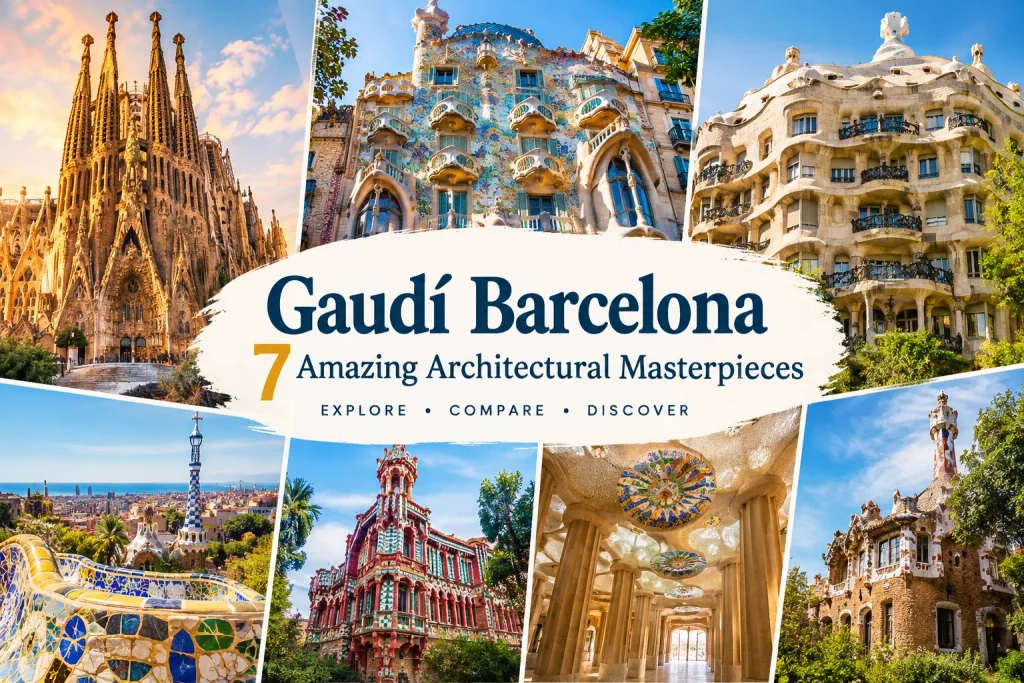
Barcelona is closely associated with Antoni Gaudí, the Catalan architect whose buildings combine imaginative forms, natural inspiration, colourful surfaces and innovative structural ideas. From the soaring towers of Sagrada Família to the sculptural façade of Casa Batlló, his work gives the city an architectural identity that is difficult to confuse with any other.
Exploring Gaudí Barcelona means seeing more than famous tourist attractions. It means understanding how one architect approached religious architecture, private homes, public spaces and decorative arts in remarkably different ways.
When exploring Gaudi Barcelona, it helps to compare the architect’s major works rather than treating them as similar tourist attractions. Each building reveals a different aspect of his design approach, from religious symbolism and structural experimentation to colourful façades and landscape architecture. This guide to Gaudi Barcelona explains those differences so you can decide which works deserve the most attention.
Who Was Antoni Gaudí?
Antoni Gaudí (1852–1926) was a Catalan architect and one of the leading figures associated with Catalan Modernisme, a cultural movement that developed in the late nineteenth and early twentieth centuries.
Although Gaudí is often described as an Art Nouveau architect, his mature work developed a distinctive language of its own. He drew inspiration from natural structures, religious ideas, geometry, traditional craftsmanship and the possibilities of materials such as stone, iron, wood and ceramic.
Rather than relying only on conventional straight lines and symmetrical façades, Gaudí explored curves, branching columns, unusual rooflines and complex spatial arrangements. Decoration was rarely an isolated addition: it often formed part of the building’s overall design.
His work also changed over time. His earlier projects show influences from different historical styles, while later buildings display increasingly original structures and more integrated architectural decoration.
For anyone researching Gaudí Barcelona, this development is important. His buildings are not all variations of one design. Each reflects a particular purpose, period and set of architectural challenges.
Understanding Gaudí Barcelona Architecture
The best way to understand Gaudí Barcelona is to look at how each project responds to its purpose. A religious basilica requires a different approach from a private residence, palace or landscaped public space. Gaudí adapted his designs to these different settings while maintaining a strong interest in craftsmanship, structure, and natural forms.
For architecture enthusiasts, Gaudí Barcelona offers an opportunity to compare several design approaches within one city. The buildings are connected by the architect’s imagination, but their shapes, materials, and functions differ considerably.
7 Gaudí Buildings in Barcelona Worth Understanding
1. Sagrada Família: Architecture as a Religious Vision
The Basílica de la Sagrada Família is Gaudí’s best-known work and one of the most ambitious religious buildings in modern architectural history.
Construction began in 1882, before Gaudí became involved in the project in 1883. He subsequently transformed its design, developing an elaborate architectural vision that combined Christian symbolism, geometry and natural forms.
The basilica is notable for its monumental scale, sculptural façades, branching interior columns and towers. Inside, the columns spread upward like trees, creating a space that connects structural engineering with imagery drawn from nature.
The building is also different from Gaudí’s residential projects. Its design communicates religious narratives and ideas through architectural forms, sculpture and the organisation of its spaces.
What makes it unique: the integration of religious symbolism, complex geometry and structural design on a monumental scale.
Best for: visitors interested in sacred architecture, engineering, sculpture and Gaudí’s mature architectural vision.
Sagrada Família is often described as a Gaudí cathedral, but its correct designation is a basilica. That distinction matters when researching Gaudí’s religious architecture.
2. Park Güell: Architecture Integrated with the Landscape
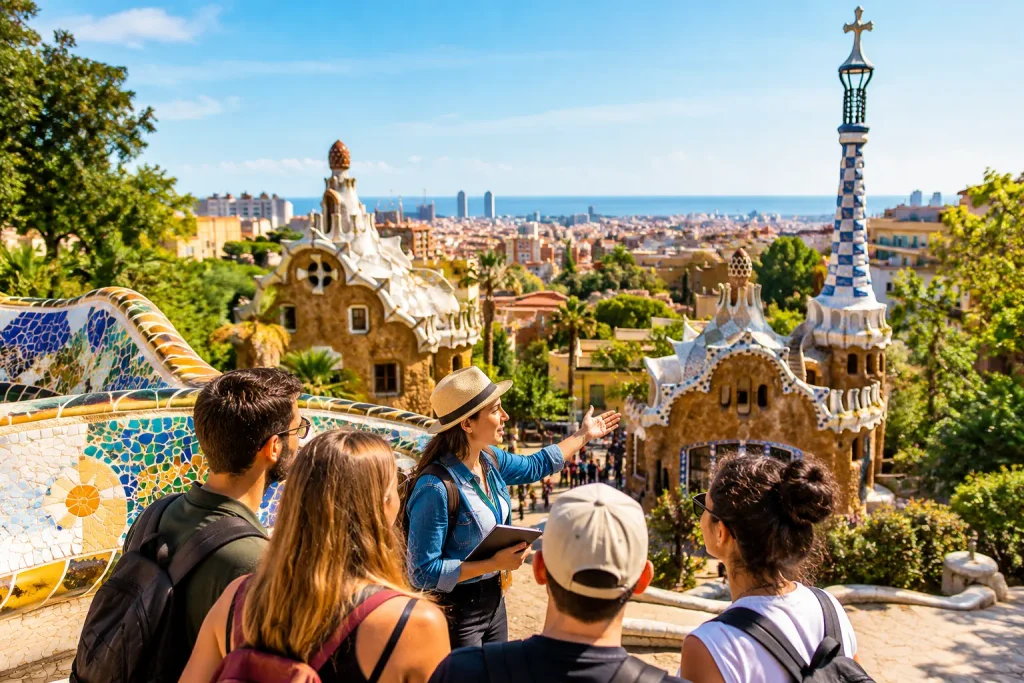
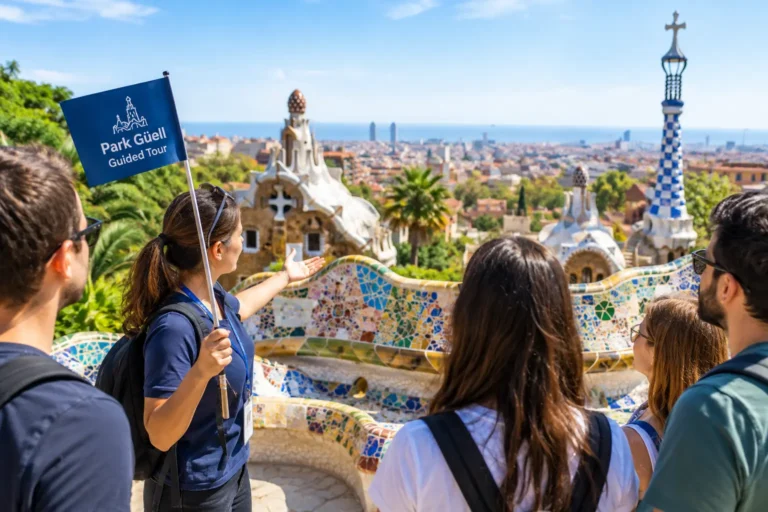
Park Güell demonstrates how Gaudí approached the relationship between buildings, landscape and public space.
The project was commissioned by Eusebi Güell as part of an ambitious residential development. The original plan was not completed as intended, but its constructed architectural and landscaped areas became one of Barcelona’s best-known heritage sites.
Instead of treating the landscape as a background, Gaudí incorporated the terrain into the design. Stone structures, covered spaces, curved forms and ceramic decoration contribute to an environment where architecture and nature appear closely connected.
Park Güell also illustrates Gaudí’s use of materials and craftsmanship. Irregular ceramic fragments create colourful surfaces, while curved architectural elements soften the appearance of the built environment.
What makes it unique: the relationship between architecture, landscape, public space and decorative craft.
Best for: visitors who want to explore an outdoor architectural environment rather than a single enclosed building.
For a closer look at the park’s individual features, routes and visitor experience, see our What to Do in Park Güell guide. That guide covers the park itself, while this article focuses on how it fits into Gaudí’s wider body of work.
3. Casa Batlló: A Façade That Rejects Conventional Geometry
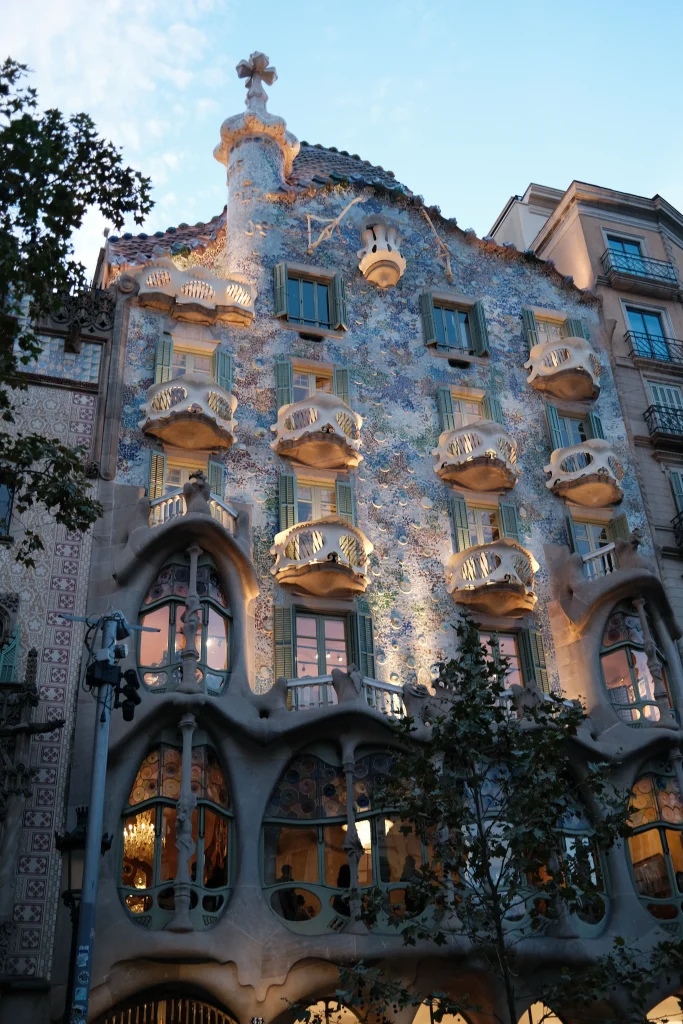
Casa Batlló, located on Passeig de Gràcia, is one of Gaudí’s most distinctive residential works.
The building was remodelled for the Batlló family in the early twentieth century. Its façade is notable for its flowing forms, colourful surface, sculptural balconies and roofline. The overall effect differs sharply from the rigid geometry associated with many conventional urban buildings.
Its visual identity comes from the way architectural elements work together. Windows, balconies, ceramic surfaces and structural details contribute to a unified composition rather than appearing as unrelated decorations.
The building is often interpreted through natural and marine imagery. Such comparisons can help visitors understand its appearance, although individual symbolic interpretations should not automatically be treated as documented intentions.
What makes it unique: the transformation of an urban residential façade into an expressive, sculptural composition.
Best for: visitors interested in façade design, colour, craftsmanship and the relationship between architecture and visual storytelling.
Among the major Gaudí buildings in Barcelona, Casa Batlló is particularly useful for understanding how an existing urban building could be reimagined through a comprehensive architectural redesign.
4. Casa Milà (La Pedrera): A Building Shaped by Movement
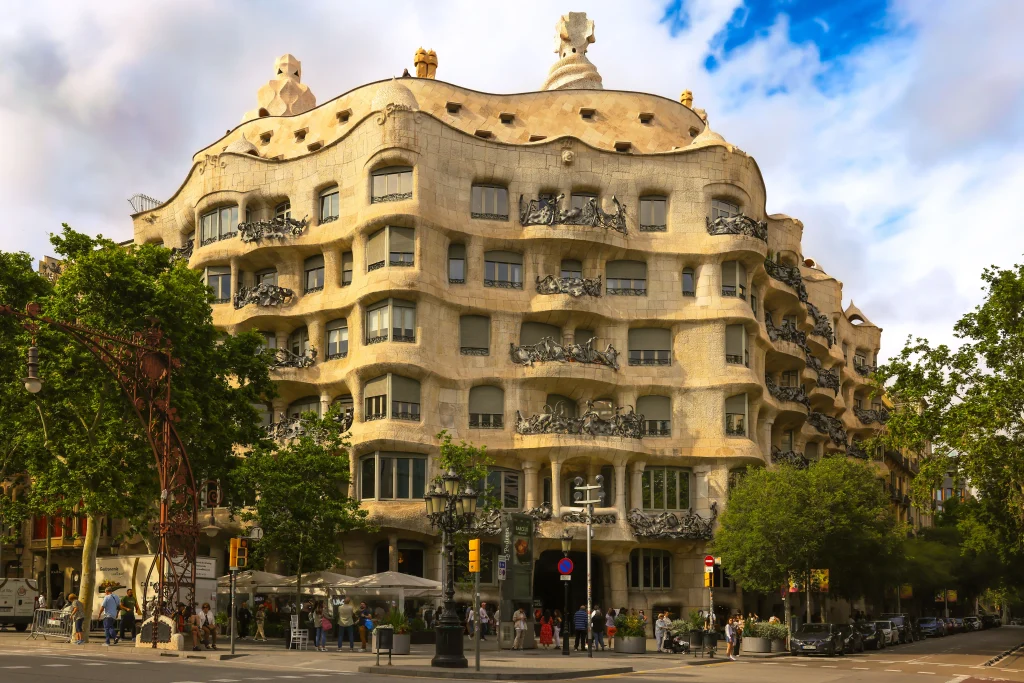
Casa Milà, commonly known as La Pedrera, offers a different interpretation of Gaudí’s residential architecture.
Its stone façade appears to move across the street frontage, with undulating lines that avoid the appearance of a conventional flat exterior. The building also incorporates distinctive wrought-iron balconies and an expressive roofscape.
Its importance extends beyond its exterior. The organisation of the building, its structural approach and the relationship between its internal spaces and façade make it a significant example of Gaudí’s architectural experimentation.
The rooftop is especially distinctive because its sculptural forms combine practical architectural elements with a dramatic visual composition.
What makes it unique: its flowing stone exterior, structural experimentation and sculptural roofscape.
Best for: visitors interested in building design, materials, roof architecture and the relationship between structure and appearance.
Casa Milà and Casa Batlló are sometimes grouped together because both are residential works on Passeig de Gràcia. However, they offer different architectural experiences: Casa Batlló is particularly known for its richly expressive façade, while Casa Milà emphasises continuous forms and the sculptural character of its overall structure.
5. Palau Güell: Monumental Design Within an Urban Palace
Palau Güell was designed for Eusebi Güell and completed in the late nineteenth century. It represents an earlier stage in Gaudí’s development, before some of the more immediately recognisable features of his mature work became prominent.
The palace was designed around the needs of a wealthy urban household. Its architectural significance lies in the organisation of its interior, its use of materials, its spatial composition and its distinctive rooftop features.
The central hall is particularly important to the building’s internal arrangement. The roof structures and decorative details also show Gaudí experimenting with forms that would become more developed in later projects.
Unlike Park Güell, Palau Güell is not a landscape-based public environment. It is an urban residence whose architecture reflects domestic functions, social status and the design challenges of a compact city site.
What makes it unique: the integration of residential functions, monumental interiors and inventive roof design.
Best for: visitors interested in the development of Gaudí’s work and the relationship between architecture, wealth and domestic life.
6. Casa Vicens: An Early Experiment in Colour and Pattern
Casa Vicens is one of Gaudí’s early major commissions and offers a useful contrast with his later architectural works.
Its design incorporates colourful ceramic tiles, patterned surfaces, ornamental details and influences from different architectural traditions. The building does not yet display exactly the same visual language as Sagrada Família or Casa Milà, making it valuable for understanding how Gaudí’s style developed.
The combination of materials and decorative motifs is particularly important. Instead of depending on a plain exterior, Casa Vicens uses colour and pattern as major elements of its architectural identity.
This early project shows that Gaudí’s interest in detailed craftsmanship and distinctive surfaces was already present before his most famous mature works.
What makes it unique: its decorative richness and the insight it provides into Gaudí’s early architectural development.
Best for: visitors who want to compare Gaudí’s early experiments with his later, more recognisable designs.
7. Gaudí House Museum: A Personal Connection to the Architect
The Gaudí House Museum provides a different perspective from the architect-designed buildings themselves. Located within Park Güell, it is associated with the period when Gaudí lived there, from 1906 to 1925.
Rather than serving as another example of the same architectural category as Sagrada Família or Casa Milà, the museum offers context about Gaudí’s life and domestic environment.
Its role in a Gaudí-focused visit is therefore different. A visitor interested primarily in monumental architecture may prioritise the basilica or major residential works, while someone curious about Gaudí’s personal history may want to explore the museum as well.
What makes it unique: its connection with Gaudí’s life rather than simply the scale or visual impact of a major architectural commission.
Best for: visitors interested in the architect’s personal history and domestic surroundings.
For information specifically about the museum, its exhibits and practical visit details, see our dedicated Gaudí House Museum guide.
What Makes Gaudí’s Architecture Different?
Understanding Gaudi Barcelona also means recognising the importance of context. These buildings were created for different clients and purposes, and they belong to different stages of Gaudí’s career. Looking at them together reveals the range of his work more clearly than studying any single building in isolation. The diversity of Gaudi Barcelona architecture comes from the way Gaudí adapted his ideas to each project rather than repeating one design.
Nature-Inspired Forms
Gaudí frequently looked to nature when developing architectural forms. Branching columns, curved surfaces and organic-looking structures appear across different projects.
The important point is not that every building imitates a particular plant or animal. Rather, natural forms helped inform his approach to structure, geometry and visual composition. This connection between nature and design is one of the defining characteristics of Gaudi Barcelona architecture, visible in works such as Sagrada Família and Casa Milà.
Materials as Part of the Design
Stone, iron, wood, glass and ceramic are central to the character of Gaudí’s work. Their textures, colours and physical properties contribute to the overall architecture.
His decorative surfaces are not simply interchangeable finishes. In many projects, material choice helps define the building’s identity. When exploring Gaudi Barcelona, pay attention to how different materials change the appearance of each building, from colourful ceramic decoration to sculpted stone façades.
Structure and Decoration Working Together
In conventional architecture, decoration may be treated as something added after the main structure is designed. Gaudí often developed a closer relationship between the two.
Columns, façades, roof elements and ornamental details can contribute simultaneously to structural function and visual expression. This integration helps distinguish Gaudi Barcelona buildings from structures where decoration and engineering appear more separate.
Different Designs for Different Purposes
Gaudí did not use one formula for every commission. A basilica, a private residence, a palace and a landscaped public space have different requirements.
That is why comparing his works is more revealing than simply collecting photographs of famous buildings. It shows how his architectural ideas changed according to the purpose of each project. To understand Gaudi Barcelona fully, compare the religious scale of Sagrada Família with the residential design of Casa Batlló and the landscape-based architecture of Park Güell.
Ultimately, the defining feature of Gaudi Barcelona is the variety within Gaudí’s work. Nature, materials, structure and purpose come together differently in each building, making comparisons essential to understanding his architectural legacy.
Which Gaudí Buildings in Barcelona Should You Choose?
If you are exploring Gaudi Barcelona, choose the buildings according to your interests, available time and preferred type of architecture rather than trying to visit every site. Each of Gaudí’s major works offers a different perspective on his architectural style.
- For religious architecture: prioritise Sagrada Família to explore Gaudí’s ambitious approach to sacred spaces, structural design and religious symbolism.
- For landscape and outdoor design: choose Park Güell, where architecture, natural forms and decorative ceramics come together.
- For expressive residential façades: compare Casa Batlló and Casa Milà to see two different approaches to sculptural forms and urban architecture.
- For Gaudí’s earlier development: consider Casa Vicens and Palau Güell, which help explain how his architectural ideas evolved.
- For personal history: consider the Gaudí House Museum to learn more about the architect’s life and domestic surroundings.
For anyone planning a Gaudí Barcelona architecture visit, comparing two contrasting buildings can be more rewarding than rushing through every attraction. Casa Batlló and Casa Milà, for example, reveal different approaches to façade design, while Sagrada Família offers a very different experience from the residential buildings.
If you want a broader overview of Barcelona beyond Gaudí’s work, our Things to Do in Barcelona guide covers other attractions and general sightseeing options.
If your plans specifically involve visiting Sagrada Família and Park Güell on the same day, see our practical Sagrada Família to Park Güell route guide. It focuses on the journey and scheduling rather than repeating the architectural comparisons in this article.
Ultimately, the best Gaudi Barcelona experience depends on what interests you most: religious architecture, innovative residential design, decorative craftsmanship or the relationship between buildings and nature. Selecting sites with different architectural characteristics will give you a better understanding of Gaudí’s work.
Gaudí and Barcelona’s Architectural Heritage
Gaudí’s significance extends beyond the popularity of individual buildings. His work demonstrates an unusually close relationship between architecture, engineering, decorative arts and symbolic expression.
UNESCO recognises the Works of Antoni Gaudí as a World Heritage property. The listing reflects the architectural and artistic importance of a group of his works, rather than treating every building associated with his name as part of the same designation.
For a reliable overview of the recognised heritage property, consult the UNESCO listing for the Works of Antoni Gaudí.
For visitors, the value of exploring Gaudí Barcelona lies in seeing the differences between the works as well as their shared qualities. Sagrada Família, Park Güell, Casa Batlló and Casa Milà each approach architectural design from a different direction.
Together with his earlier commissions and the places associated with his life, they reveal an architect who continually tested the boundaries between structure, function and artistic expression.
Final Thoughts
Gaudi Barcelona is much more than a collection of famous buildings. It represents an architectural legacy shaped by nature, geometry, religious symbolism, materials and craftsmanship. Sagrada Família, Park Güell, Casa Batlló and Casa Milà each demonstrate a different side of Gaudí’s approach to design.
If you are interested in Gaudi Barcelona architecture, compare the buildings according to their purpose and distinctive features. Use our specialist Park Güell, Gaudí House Museum and transport guides for practical details, while this article serves as your overview of Gaudí’s major architectural works.
Plan Your Visit to Park Güell
Check tickets, prices and available experiences before you visit.
View Tickets