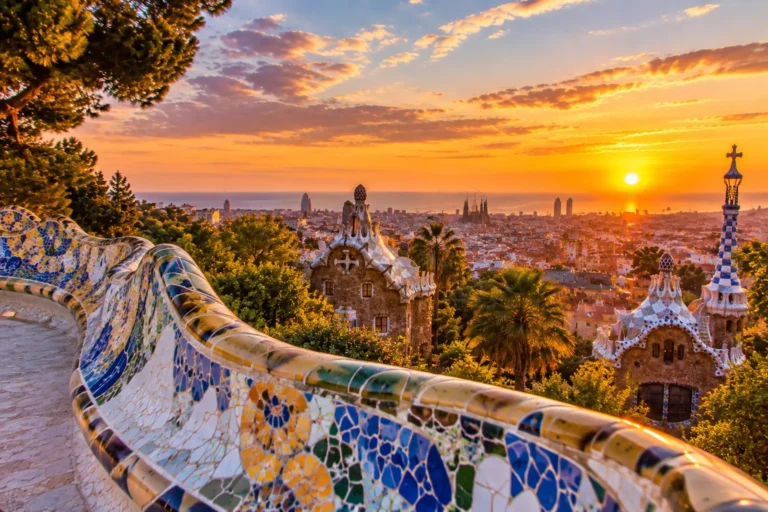
Park Güell Lizard
The famous Park Güell lizard is a colorful mosaic sculpture located on the Dragon Stairway, near the main monumental entrance to Park Güell in Barcelona. It is commonly called the Park Güell dragon, lizard, or salamander and has become one of the most recognizable symbols of Park Güell and Barcelona.
What Is the Park Güell Lizard?
The Park Güell lizard is a decorative mosaic sculpture that forms part of Antoni Gaudí’s architectural vision for Park Güell. Although visitors often call it a lizard or dragon, it is widely associated with a salamander.
The sculpture is covered with colorful ceramic pieces using the trencadís mosaic technique, which became strongly associated with Gaudí’s work. It sits prominently on the staircase leading toward the upper architectural spaces of the monumental area.
Because of its distinctive appearance and location, the lizard has become one of the most photographed features of Park Güell.
Is the Park Güell Lizard a Dragon or a Salamander?
This is one of the most common questions about the sculpture.
You will find several names used online:
- Park Güell lizard
- Park Güell dragon
- Park Güell salamander
- Gaudí lizard
- Dragon of Park Güell
- Drac de Gaudí
- Lagarto de Park Güell
- Salamandra de Gaudí
These names mainly reflect different interpretations and translations. For visitors, they generally refer to the same famous colorful mosaic creature on the Dragon Stairway.
Where Is the Park Güell Lizard?
The lizard is located on the Dragon Stairway, near the monumental entrance to Park Güell.
A simple route is:
Main Entrance → Dragon Stairway → Mosaic Lizard → Hypostyle Room → Nature Square
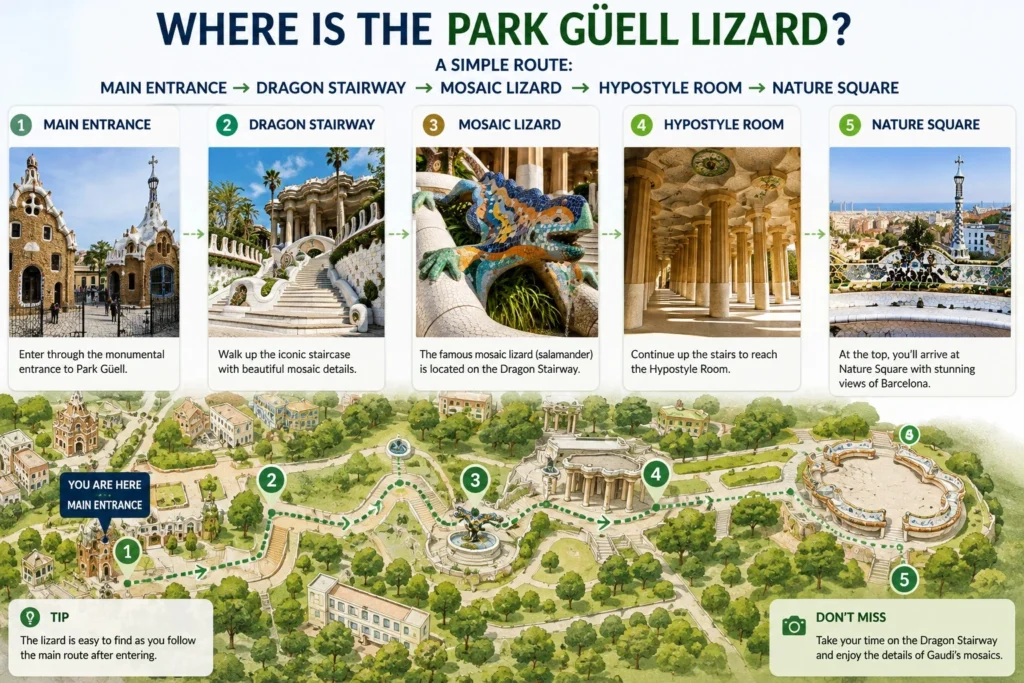
This route allows you to see several of Park Güell’s best-known features during the same part of your visit.
How to Find the Park Güell Dragon
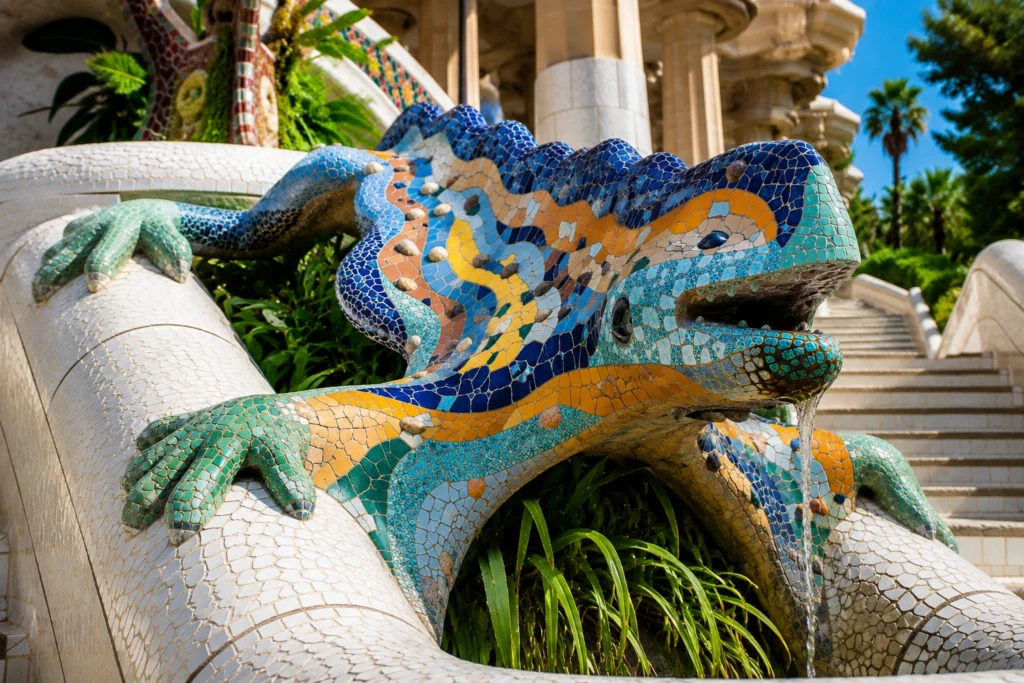
When you enter the monumental area, look for the large staircase decorated with colorful ceramic details. The famous mosaic creature is positioned directly on the staircase.
It is difficult to miss once you reach the correct area, although crowds can make photography more difficult. If you want a photograph without a large crowd around the sculpture, visiting during a less busy period can help.
Planning to see the Park Güell lizard? Check the current Park Güell ticket options and entry times before your visit so you know how to access the monumental area.
Why Is the Park Güell Lizard Famous?
The sculpture became famous for several reasons.
Its Location
It stands in one of the most recognizable areas of Park Güell, directly on the Dragon Stairway.
Its Colors
The combination of colorful ceramic fragments makes the sculpture immediately recognizable. The mosaic surface also creates different visual effects depending on the light and viewing angle.
Gaudí’s Design
The sculpture forms part of Gaudí’s wider architectural and decorative vision for Park Güell.
Its Connection to Barcelona
The lizard has become closely associated with Park Güell and is now one of the most recognizable visual symbols connected with Barcelona’s Gaudí heritage.
The Mosaic Technique: Trencadís
One of the most interesting aspects of the Park Güell lizard is its surface.
The sculpture uses trencadís, a type of broken-tile mosaic technique associated with Catalan Modernisme and particularly visible in Gaudí’s work.
Instead of using large, uniform ceramic tiles, the technique creates surfaces from irregular fragments. This produces:
- Varied colors
- Irregular patterns
- Reflective surfaces
- Organic-looking textures
- Unique decorative details
Look closely at the lizard and you will notice that its surface is not simply painted. Individual ceramic pieces create the colorful visual effect.
What Colors Does the Park Güell Lizard Have?
The lizard features a mixture of bright ceramic colors. Depending on the light and your camera, you may notice different shades across the sculpture.
The colorful surface is one of the reasons the creature photographs so well. Its mosaic technique also means that its appearance can change depending on the angle and lighting.
What Does the Park Güell Lizard Represent?
Visitors and writers have suggested several possible interpretations of the sculpture, including connections with:
- Nature
- Mythology
- Catalan symbolism
- Alchemy
- Salamanders
- Fire
- Gaudí’s religious and natural inspirations
However, it is important not to present every interpretation as a confirmed fact. Gaudí’s work often combines natural forms, symbolism and religious references, but not every modern interpretation of the Park Güell lizard has been definitively established by historical evidence.
Therefore, these ideas are better described as interpretations rather than one proven meaning.
The Dragon Stairway
The lizard is not an isolated attraction. It forms part of the Dragon Stairway, one of the most important architectural features of the monumental area.
The staircase connects different levels and guides visitors toward the Hypostyle Room. As you explore it, look beyond the famous creature and take time to appreciate the surrounding architecture and decorative details.
What to See Near the Park Güell Lizard
One advantage of visiting the lizard is that several major Park Güell attractions are nearby.
Hypostyle Room
Continue up the Dragon Stairway and you reach the Hypostyle Room. Its columns and decorated ceiling are among the most recognizable features of Park Güell.
Nature Square
Above the Hypostyle Room is Nature Square, one of the park’s most famous open spaces.
Serpentine Bench
The curved mosaic bench around Nature Square is another major Gaudí feature.
Barcelona Viewpoints
From the elevated areas, you can enjoy views across Barcelona. This makes it possible to see the lizard and several other important Park Güell attractions without following a complicated route.
Best Time to See the Park Güell Lizard
There is no single perfect time for everyone.
If photography is your priority, visiting during a less crowded period can make the experience easier.
Morning
Morning can be useful for visitors who want to explore before the park becomes busier and temperatures rise.
Afternoon
Afternoon visits can work well if you are combining Park Güell with other Barcelona attractions.
Sunset
If your ticket and the current visiting schedule allow it, later-day light can create attractive photography conditions. Always check the current Park Güell visiting schedule before planning your visit around sunset.
Can You Take Photos of the Park Güell Lizard?
Yes. Photography is one of the most popular things visitors do at the Dragon Stairway.
For better photographs:
- Visit when visitor numbers are lower.
- Take photographs from several angles.
- Photograph the full staircase as well as the sculpture.
- Look closely at the mosaic details.
- Avoid blocking other visitors.
- Follow the current visitor rules.
A wide photograph can show the relationship between the lizard, staircase and surrounding architecture, while a close photograph can highlight the ceramic mosaic details.
Is the Park Güell Lizard Worth Seeing?
Yes. Even if you have limited time at Park Güell, the lizard is one of the easiest attractions to prioritize.
It is:
- Iconic
- Easy to recognize
- Highly photogenic
- Closely associated with Gaudí
- Located near other major attractions
If you are interested in Gaudí’s architecture, it is particularly useful to see the lizard together with the Hypostyle Room, Nature Square and the serpentine bench.
Park Güell Lizard and Gaudí
Antoni Gaudí designed Park Güell as part of an ambitious residential project commissioned by Eusebi Güell.
Although the original residential vision was not completed as planned, the architectural and landscaped areas that were constructed became one of Barcelona’s most important cultural attractions.
The lizard belongs to this wider architectural environment. Its organic shape and colorful mosaic surface fit naturally with Gaudí’s broader use of nature-inspired forms and ceramic decoration.
Park Güell Lizard: Visitor Tips
1. Check Your Ticket
The famous lizard is in the monumental area, so make sure your visit includes the appropriate access.
2. Check Your Entry Time
Park Güell uses controlled entry arrangements for the regulated area.
3. Do Not Rush
After photographing the lizard, explore the surrounding staircase and architecture.
4. Wear Comfortable Shoes
Park Güell contains stairs and slopes, so comfortable footwear is recommended.
5. Visit Other Nearby Attractions
Combine the lizard with the Hypostyle Room, Nature Square and the serpentine bench.
6. Respect the Monument
Do not climb on or lean against protected architectural and heritage elements.
Park Güell Lizard vs. Other Gaudí Symbols
The lizard is one of several famous visual elements associated with Gaudí.
You may also encounter:
- Mosaic surfaces
- Organic stone structures
- Curved benches
- Decorative ceramic work
- Natural forms
- Unusual architectural shapes
If you are visiting Barcelona specifically to explore Gaudí, consider including Sagrada Família, Casa Batlló, Casa Milà and Park Güell in your itinerary.
Frequently Asked Questions
What is the Park Güell lizard called?
It is commonly called the Park Güell lizard, dragon or salamander. In different languages, you may also see terms such as lagarto, salamandra and drac.
Is the Park Güell lizard a dragon?
It is commonly called a dragon by visitors, but it is also widely described as a salamander or lizard. The exact interpretation varies.
Where is the lizard in Park Güell?
The famous mosaic creature is located on the Dragon Stairway near the monumental entrance to Park Güell.
Who designed the Park Güell lizard?
The sculpture forms part of Antoni Gaudí’s design for Park Güell.
Why is the Park Güell lizard colorful?
Its surface uses colorful ceramic mosaic pieces associated with the trencadís technique.
What does the Park Güell dragon symbolize?
There are several interpretations involving nature, mythology, symbolism and Gaudí’s inspirations. Not every interpretation is historically confirmed, so these should be treated as interpretations rather than established facts.
Is the Park Güell lizard free to see?
Access depends on the area and current visitor regulations. The famous monumental features are within the regulated tourist area, so visitors should check current ticket requirements before planning their visit.
Do I need Park Güell tickets to see the lizard?
If you want to access the regulated monumental area where the famous lizard is located, check the current ticket and entry requirements before visiting.
Can I take pictures of the Park Güell lizard?
Yes. Visitors commonly photograph the sculpture, subject to the current visitor rules.
What else should I see after the Park Güell lizard?
After seeing the lizard, continue toward the Hypostyle Room and Nature Square, then explore the serpentine bench and other architectural features.
Is the Park Güell dragon the same as the lizard?
Yes. The names are commonly used to refer to the same famous mosaic creature on the Dragon Stairway.
What is Gaudí’s lizard?
Gaudí’s lizard is another way of referring to the famous mosaic creature at Park Güell.
Final Thoughts
The Park Güell lizard is much more than a popular photo opportunity. It is part of the Dragon Stairway and the wider architectural composition created by Antoni Gaudí.
When you visit, take a moment to look beyond the sculpture itself. Examine the mosaic technique, staircase, surrounding architecture and the way the different elements lead toward the Hypostyle Room and Nature Square.
If seeing the famous lizard is one of the main reasons you are visiting Park Güell, make sure you plan your access and entry time in advance.
The Park Güell lizard, known as El Drac, is more than a colorful mosaic decoration. Its form connects with Gaudí’s wider use of natural shapes and symbolism throughout the park. For a deeper architectural perspective on the lizard and salamander imagery, see this University of Barcelona publication
Plan Your Visit to Park Güell
Check tickets, prices and available experiences before you visit.
View Tickets